MyFreeTime3 min read
Yahtzee's origin, rules and a smarter way to play
A Canadian couple invented the Yacht Game around 1954, traded it to Edwin Lowe for a thousand copies, and were never named. The game borrowed from Yacht, Generala and Yatzy. What has kept it on tables for seventy years is a scorecard where every score you write closes a box for the rest of the game.
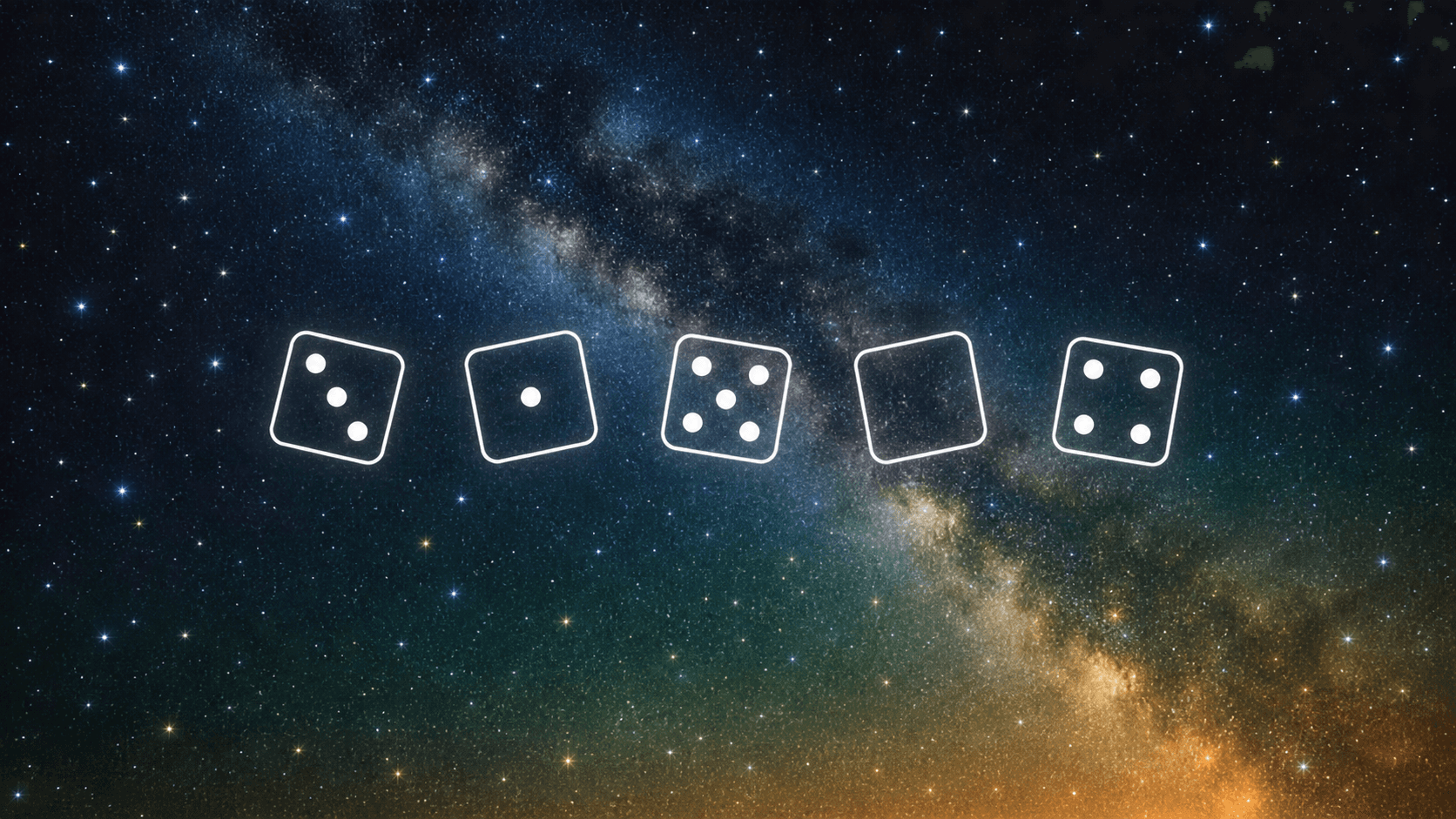
Somewhere around 1954, a wealthy Canadian couple started playing a dice game aboard their yacht. They called it the Yacht Game. Friends who played it wanted copies of their own, so the couple approached a New York toy manufacturer named Edwin S. Lowe and asked him to produce a few sets they could give away.
Lowe had form. He had spotted a rudimentary game called Beano at a Georgia carnival in 1929, renamed it Bingo, and built a company on it. He looked at the Yacht Game and offered to buy the rights outright.
The couple agreed. Their only condition was that they receive the first thousand sets, so they could keep giving the game to friends.
Lowe registered the name Yahtzee as a trademark in 1956. The game went on to sell tens of millions of copies. Milton Bradley bought his company in 1973, and Hasbro owns it today.
The couple were never named. No one has ever come forward to claim it.
What they were actually building on
The yacht story is good, and it is also incomplete. Yahtzee did not appear from nowhere.
A game called Yacht was published in 1938 with the same essential shape: five dice, a scorecard split between plain number counts and poker-style combinations. South America had Generala. Scandinavia had Yatzy. A game called Yatzie appeared in a 1943 compendium set.
Yahtzee is the most famous branch of that tree, not its root. What the couple did, and what Lowe recognised, was arrive at a version that balanced well enough to be played for seventy years.
The rules, in one pass
Five dice. Thirteen turns. On each turn you roll all five, then may reroll any of them up to twice more, keeping whichever you like between rolls. At the end of the turn you must write a score into one of thirteen categories, and once a category is used it is closed for the rest of the game.
The scorecard has two halves.
Upper section. Six boxes, one for each number. You score the sum of the dice showing that number. Three fours in the fours box scores twelve. If your upper section totals 63 or more, you get a 35 point bonus, which is exactly the total you reach by scoring three of every number.
Lower section. Seven boxes with poker logic:
| Box | What it scores |
|---|---|
| Three of a kind | The sum of all five dice |
| Four of a kind | The sum of all five dice |
| Full house | 25 points |
| Small straight, four in a row | 30 points |
| Large straight, five in a row | 40 points |
| Yahtzee, five of a kind | 50 points |
| Chance | The sum of all five dice, whatever they are |
A second Yahtzee in the same game is worth a 100 point bonus.
Why it survived
The rules fit on the back of the box, and the interesting decisions do not.
The real game is what you do with a turn that went badly. You have three fives and nothing else, and you have already used your fives. Do you take fifteen in three of a kind and lose the category, or do you write a zero somewhere cheap and keep your options open?
Every turn forces a commitment, and every commitment closes a door. By turn nine you are managing the damage from turns one through eight. That structure is why a game with almost no rules holds up against games with a hundred.
The chance box is the clearest piece of design in it. It exists purely to absorb a bad turn, and it is usually the thing you regret spending first.
The part the couple got right
They could have patented it, named it after themselves, and taken a royalty. Instead they traded the whole thing for a thousand copies to give to friends, which tells you roughly what they were optimising for.
Seventy years later the game is still being played, mostly by people who have never heard of Edwin Lowe and would not recognise a yacht if they saw one.
MyYahtzee is our version, if you want somewhere to roll.
Read more

The Art of the Flip: How to Turn Everyday Clutter Into Cash Without the Guesswork
The friction of reselling is real, but beating it is easier than you think. Let’s break down how to stop guessing, price like a pro and finally clear out your space.

Crafting Focused iPhone Experiences: iOS App Trends, Independent Studio Dynamics, and the Future of Mobile Software
Let's dive deep into the defining iOS app trends of 2026, backed by industry data and explore how focused software and indie studio dynamics are changing the game.

How to organise iPhone videos so you actually rewatch them
Phones made filming effortless, so camera rolls fill with clips nobody opens again. Why that happens, and how collections and loops turn a pile of video into something you watch.