MySmartMates3 min read
How to sell used items: identify, price and list them fast
Working out what an item is, what it is worth and where to list it are the three steps that stop most people from selling what they no longer use. After a Saturday cleanout that produced four hours of research and two listings, we built MySellingMate to do those steps from one photo.

Look around the room you are in. Somewhere there is a drawer of cables for devices you no longer own, a jacket you have not worn in two winters, a speaker, a lens, a lamp. Most homes have a shelf of things that still work and that someone else would pay for.
How much it adds up to depends on who is counting. A 2019 survey for Mercari of 1,000 American adults put it at about 42 unused items worth around $723 per household. Estimates from the resale platforms themselves run much higher. The market that would take those items is large either way: ThredUp's 2025 resale report expects secondhand clothing alone to reach $367 billion worldwide by 2029.
Plenty of people do sell. In the OfferUp Recommerce Report 2025, 54 per cent of American adults said they had sold a pre-owned item in the past year. The rest have usually tried, or thought about trying, and stopped at the same place.
Where the time goes
In the Mercari survey, 65 per cent of people said selling was too hard, took too long or was a hassle, and the most common reason was not knowing what their things were worth. That matches what anyone who has tried will tell you. The listing itself is quick. The research before it is not.
| Step | What makes it slow |
|---|---|
| Identifying the item | The tag says the brand, not the model, the year or the variant that sets the price |
| Pricing it | Comparable listings vary with condition, and a price that is too high sits while one that is too low leaves money behind |
| Choosing where | Clothes sell on one platform, electronics on another, furniture locally, and it changes by country |
Each step on its own is manageable. Together, repeated for every item in a box, they are why the box goes back into the cupboard.
The Saturday that started it
MySellingMate did not start in a meeting. It started during a weekend cleanout, when a few of us spent a Saturday surrounded by boxes of audio gear, jackets and tech we no longer used.
We opened tab after tab, compared sold listings, and argued over what a fair price was. By five in the afternoon we had spent four hours and listed two items.
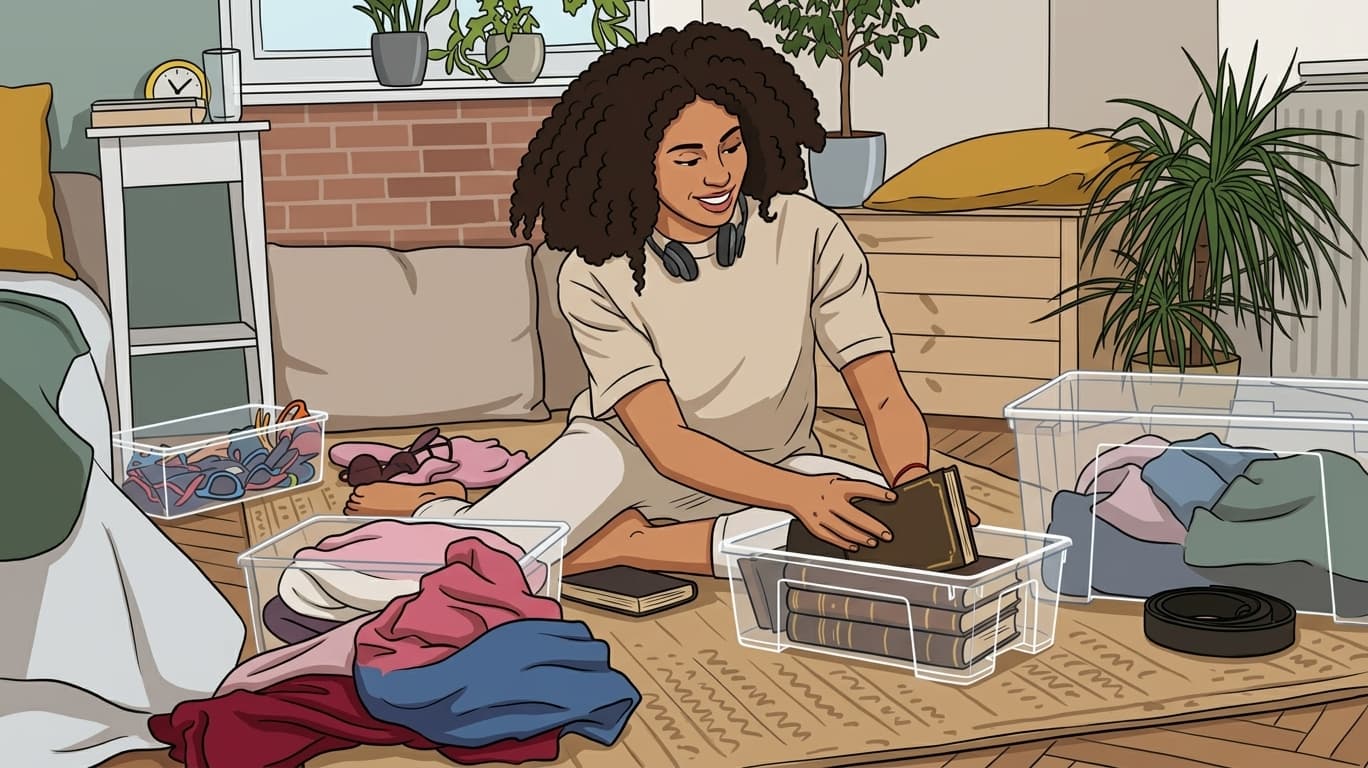
There had to be a better way to turn a physical item into a price and a place to list it. That frustration became MySellingMate.
One photo instead of a stack of tabs
The idea is to turn the three slow steps into one. You photograph the item. The app works out what it is, estimates a fair price from comparable used listings in your local currency, and suggests where it is likely to sell in your region.
It also had to respect what people keep in their homes. There is no account to create and no ad tracking. Your scan history and estimated values stay on your iPhone. The photo itself is sent for analysis through a server in the EU, as the app's privacy policy sets out.
The box in the cupboard
The things in that box are not going to become more valuable by waiting, and most of them will quietly become less. If the only thing standing between them and someone who wants them is an afternoon of research, that afternoon is worth shortening.
MySellingMate is on the App Store now, if you have a box of things to price.
Read more

Crafting Focused iPhone Experiences: iOS App Trends, Independent Studio Dynamics, and the Future of Mobile Software
Let's dive deep into the defining iOS app trends of 2026, backed by industry data and explore how focused software and indie studio dynamics are changing the game.

How to organise iPhone videos so you actually rewatch them
Phones made filming effortless, so camera rolls fill with clips nobody opens again. Why that happens, and how collections and loops turn a pile of video into something you watch.

Do founder habits work? 7 routines checked against research
Time blocks, reading, morning exercise, three priorities, an evening stop, tracking and sleep. Which of the usual founder habits have research behind them, and which only have a statistic.